The Surprising Power of Hitting Delete
 When people think about SEO, the instinct is usually to add more. More pages. More blogs. More content. However, deleting content is one of the most effective ways to improve your search visibility. Cutting back the clutter can help your website perform better, load faster and rank higher. And you don’t need to be an SEO expert to do it well. In this blog, we explore the surprising power of hitting delete on your keyboard.
Search engines reward quality, not quantity. A hundred-page website isn’t impressive if half of those pages are outdated, off-brand or just plain unhelpful. Every time Google or Bing crawls your site, they look at the whole picture. The stronger parts lose their shine if large sections are thin, irrelevant or repetitive. That means even your best work could get dragged down by older pages that no longer reflect your business.
So why not clear the way for your best content to perform?
How to Know What Should Go
Start by getting a list of all your website pages. It might come from your content management system, sitemap, or a simple crawl using a free tool like Screaming Frog. Once you’ve got the list, open up each page and ask yourself a few key questions:
- Is it still accurate and relevant today?
- Does it attract traffic, enquiries or engagement?
- Would I be happy for a customer to land on this page right now?
If the answer is no, that’s a red flag. But that doesn’t mean you need to delete everything straight away. Some pages can be updated or merged with others. Some might still hold SEO value, even if the copy needs a refresh.
Start with the easy wins. Get rid of old news articles, expired offers, out-of-date team bios or blog posts that don’t say anything useful. These are rarely worth keeping and often give the impression your site has been neglected.
 How Much Can You Delete Without Hurting SEO?
It’s a fair concern. Nobody wants to lose traffic or damage their visibility. But done right, deleting content improves your site’s SEO rather than harms it. You’re not wiping out value — you’re refocusing attention on what really matters.
Generally, if a page hasn’t had any traffic in over a year, doesn’t convert, and can’t be updated meaningfully, it’s probably safe to remove. Just don’t delete blindly. Check if the page has links from other sites pointing to it. If it does, set up a redirect to a more current, related page. This way, you keep the link equity and avoid frustrating users with broken links.
Some businesses delete 10% of their content and see significant SEO improvements. Others take a more aggressive approach, removing up to 30–40% of legacy content and focusing on a smaller, stronger core. It depends on your site. But if you haven’t reviewed your content in years, there’s probably much more you can cut than you think.
 Think Like a Gardener, Not an Archivist
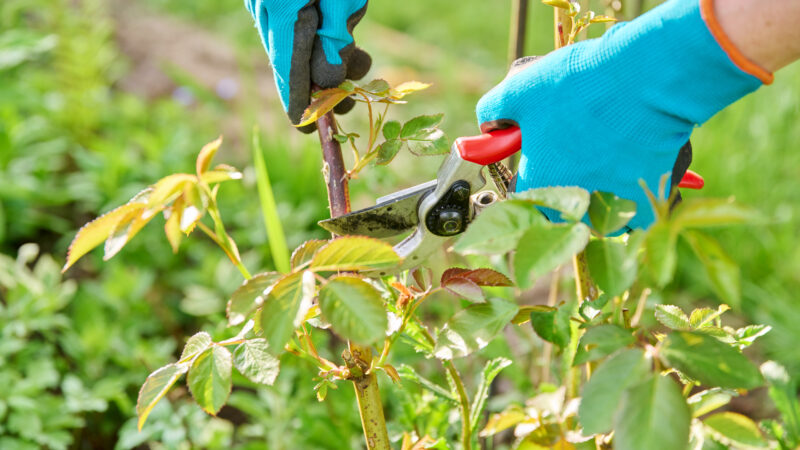
I often think about this in the same way I approach the garden. Hard pruning shrubs can feel completely counterintuitive. You wait years for a plant to grow and take shape, only to be told to cut it back. It feels wrong. But the reason you cut it isn’t to punish the plant —it’s to encourage new, stronger growth and give the plant better structure.
I’ve been through that same thought process, hesitated, then eventually dived in with secateurs in hand. And I’m always astounded by what happens next. The new growth appears quickly. Often, within weeks, the plant is back to the same height, but now it’s healthier, fuller and far better shaped. The root system hasn’t changed — it’s still strong and well-established. The pruning simply allows the top growth to catch up and thrive.

Your website works the same way. If the foundation is strong, trimming back the surface helps the whole thing perform better. Cutting back isn’t about failure. It’s a sign you care enough to nurture and maintain what you’ve already built.
 Repurpose, Refresh or Retire
Not all content needs the chop. Sometimes, older pages just need a second life. A blog post from 2019 might still cover a relevant topic but be buried under dated language or no longer reflect how your business operates. That’s where repurposing comes in.
You can rewrite or update the copy, improve the structure, add new images, include links to newer pages or even turn the piece into a different format — like a short guide, a case study or a checklist. It can breathe new life into forgotten pages and turn them into something genuinely helpful.
Likewise, if you’ve got several pages competing for the same keywords, think about merging them. Keep the strongest one, update it thoroughly, and then redirect the others to the improved version. It strengthens your SEO and makes your site easier to navigate.
There’s no need to reinvent the wheel. You already have content that can work harder — it just needs a clean-up and a clearer focus.
 Getting Started Is Easier Than You Think
A full content audit sounds technical, but it can be as simple as reviewing a list of pages and rating each one with keep, improve or remove. Start with your blog and service pages. Those tend to age fastest. Keep a spreadsheet or use your site’s backend to flag what needs work.
Set aside an hour a week. Tidy up five or six pages at a time. If you’re working with a web developer, ask them to help with redirects or page removals. If you’re on your own, most content management systems make it easy to unpublish or delete a page safely.
This is not a one-off job. A good website is constantly evolving. Schedule a review every six months to stay on top of things. It’s much easier to remove five pages regularly than fifty all at once.
The goal isn’t to have the biggest site. It’s to have the best version of your site for those who use it.
Summary
- Remove pages that are out of date, irrelevant or get no traffic
- Keep only what’s useful, accurate and aligned with your current goals
- Redirect deleted pages if they’ve got backlinks or old traffic
- Merge or repurpose content that still holds value
- A smaller, focused site is easier to navigate and better for users
- Less clutter helps search engines understand your site clearly
- Pruning your site is like pruning a plant — the growth that comes after is stronger
- Review your content regularly and treat your website like a living thing
Sometimes, the bravest thing you can do for your SEO is to get the secateurs out. Your future website will thank you.
Further Reading:
How To Create The Best Seo On Page Practices
How to Use AI to Create Content Without Losing Your Voice
Need help turning this advice into action?
If you are reviewing your website, marketing or online visibility, we can help you work out what to improve first.
Related articles
 Content
How to Explain Complicated Services Simply
If it takes ten minutes to explain what your business does, you may have already lost the customer. Just because you know your profession…
Read article
Content
How to Explain Complicated Services Simply
If it takes ten minutes to explain what your business does, you may have already lost the customer. Just because you know your profession…
Read article
 SEO
Why Sounding Human Again May Be the Future of SEO
Why sounding human again may be the future of SEO. Discover why authentic content, Geo Marketing, and real expertise matter more than ever in…
Read article
SEO
Why Sounding Human Again May Be the Future of SEO
Why sounding human again may be the future of SEO. Discover why authentic content, Geo Marketing, and real expertise matter more than ever in…
Read article
 Content
Why the Same Message Needs to Be Told in Different Ways
There is a quiet myth in business that repeating yourself looks unprofessional. We explore why the same message needs to be told in different…
Read article
Content
Why the Same Message Needs to Be Told in Different Ways
There is a quiet myth in business that repeating yourself looks unprofessional. We explore why the same message needs to be told in different…
Read article
 VideoandWeb.com