How To Create The Best Seo On Page Practices
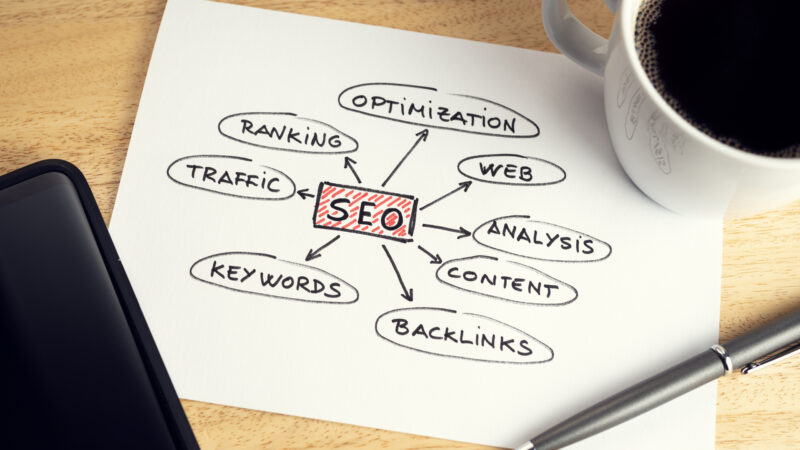
How To Create The Best Seo On Page Practices. Are you tired of your website being buried in the depths of search engine results? Do you want to take control and propel your online presence to new heights? Look no further! In this blog post, we will unravel the mysteries behind on-page SEO and arm you with a winning strategy that will make your website shine like a beacon in the digital landscape.
Overview of On-Page SEO
When it comes to on-page SEO, there are a few things you need to keep in mind to ensure your website is optimised for search engines. Firstly, your website’s title and meta tags are essential – they should be accurate and descriptive, as this is what will show up in search results. Secondly, your website’s content must be well-written and keyword-rich to rank highly in search engine results pages. Your website’s URL structure should be clean and easy to understand, as this also helps with search engine optimisation.
Keyword Research
As the first step in any SEO project, keyword research is critical to success. By understanding what potential customers are searching for online, you can tailor your on-page SEO strategy to match.
There are many ways to approach keyword research, from simple Google searches to more sophisticated tools like Ahrefs and SEMrush. Whichever method you choose, there are a few key things to keep in mind:
- Start with broad keywords and then narrow them down.
- Use keyword research tools to find related keywords and phrases.
- Look for long-tail keywords with low competition that you can realistically rank for.
- Prioritise your target keywords based on importance and search volume.
Once you have a good understanding of the keywords you want to target, it’s time to start Optimising your website for them.
Optimising Content and Headings
On-page SEO is the process of optimising a website’s content and structure to improve its ranking in search engine results pages (SERPs). The goal of on-page SEO is to earn higher search engine rankings for targeted keywords.
Several factors influence search engine rankings, and on-page SEO is one of the most important. To optimise your website for search engines, you must understand how they work and what they’re looking for. Here are some tips for Optimising Content and Headings:
1. Use keyword-rich titles and headings: Titles and headings are among the most important on-page SEO elements. They help search engines understand your page and determine whether it’s relevant to a user’s query. When creating titles and headings, be sure to include your target keyword. But don’t stuff keywords – this will only hurt your ranking.
2. Create compelling content: Content is another important element of on-page SEO. Your content should be well-written, accurate, informative, and keyword-rich. Be sure to include your target keyword in your content, but don’t overdo it – too many keywords will result in a penalty from Google.
3. Optimise your images: Images can also help improve your website’s ranking in SERPs. Include keywords in your image file names and alt text (the text that appears when an image can’t be displayed). This
Image Optimisation
As digital marketers, we often talk about on-page SEO as if it’s some sort of secret sauce that we can add to our website to make it rank higher in search engine results pages (SERPs). But the truth is that on-page SEO is not all that complicated. Once you understand the basics, it’s pretty straightforward. In this post, we’ll start with a review of the basics of on-page SEO and then move on to some advanced techniques to help you take your optimisation efforts to the next level.
Images are an important part of any website or blog post because they can help break up text, add visual interest, and give readers a break from all the words on the page. But did you know that images can also help improve your search engine rankings? Search engines like Google consider factors like image size, file name, and alt text when determining which websites and blog posts to rank in their SERPs.

 Internal Linking Strategies
By optimising your internal links, you can help search engines better understand your website and improve your overall ranking. There are a few different ways you can go about optimising your internal links. First, make sure that all of your links are relevant and point to pages closely related to the topic. Second, use keyword-rich anchor text for your links, as they will help search engines understand what each page is about and how it fits into the overall picture of your website.
Don’t forget to keep an eye on your link juice. Make sure that none of your links are broken and that they all lead to pages that are well-linked themselves. By following these simple tips, you can ensure that your website’s internal linking structure is up to par and that you’re giving yourself the best possible chance for success in the SERPs.
Technical SEO Considerations
Technical SEO considerations are often overlooked in the development of an on-page SEO strategy. However, if you want your website to rank well in search engine results pages (SERPs), you should take into account factors such as site speed, mobile friendliness, and structured data.
Site Speed: A fast-loading website is essential for a good user experience and improved SEO. Search engines consider site speed when ranking websites, so ensure your website loads quickly. Several ways to improve site speed include optimising images, minifying code, and using a content delivery network (CDN).
Mobile Friendliness: With more and more people using mobile devices to access the internet, ensure your website is optimised for mobile. Can your website be easily viewed on a small screen that users can navigate without issue? There are several ways to optimise your website for mobile, including responsive design and using Accelerated Mobile Pages (AMP).
Structured Data: Structured data is a way of organising information on your website so that search engines can easily understand it. This can help improve your website’s visibility in SERPs and click-through rates (CTRs). Types of structured data you can use include schema markup and microdata.
Advanced On-Page Practices
As your on-page SEO strategy matures, you may want to consider implementing some of the more advanced techniques. Here are a few advanced on-page practices to take your optimisation to the next level:
- Use keyword stemming.
- Optimise your images.
- Implement schema markup.
- Target long-tail keywords.
- Use social signals as a ranking factor.
Review and Monitor Your SEO Performance
Review and monitor your SEO performance regularly. It will help you identify areas where you need to make changes or improvements. There are a few key metrics you should look at when evaluating your SEO performance:
- Search engine rankings: Track your position for key keywords and phrases in the search results.
- Website traffic: Check how much traffic your website gets from organic search.
- Conversion rate: Monitor the percentage of visitors who take a desired action on your website, such as purchasing or signing up for a newsletter.
- Backlink profile: Keep an eye on the quality and quantity of websites linking to your site.
Regularly monitoring your SEO performance will help ensure your website is optimised for search engines and driving traffic and conversions.
Conclusion
On-page SEO can be a complex and time-consuming process, but it is essential for any website hoping to reach its highest potential. By understanding the basics of on-page SEO and applying advanced tactics such as keyword research, link building, content optimisation and more, you can craft an effective strategy that will help improve your search engine rankings. With the right approach, you can boost your web presence.
Further Reading
Are You Tracking These Key Performance Indicators For SEO?
The Top 7 Simple SEO Tips To Rank Higher On Google
Need help turning this advice into action?
If you are reviewing your website, marketing or online visibility, we can help you work out what to improve first.
Related articles
 SEO
Why Sounding Human Again May Be the Future of SEO
Why sounding human again may be the future of SEO. Discover why authentic content, Geo Marketing, and real expertise matter more than ever in…
Read article
SEO
Why Sounding Human Again May Be the Future of SEO
Why sounding human again may be the future of SEO. Discover why authentic content, Geo Marketing, and real expertise matter more than ever in…
Read article
 SEO
How to Get Your Website to the Front of the Crowd
Creating a website today without SEO, social media, or any marketing at all is a bit like standing at the back of the O2…
Read article
SEO
How to Get Your Website to the Front of the Crowd
Creating a website today without SEO, social media, or any marketing at all is a bit like standing at the back of the O2…
Read article
 SEO
Designing a Website with SEO in Mind
Designing a Website with SEO in Mind walks you through the steps you need to creae a website that serves people and search engines…
Read article
SEO
Designing a Website with SEO in Mind
Designing a Website with SEO in Mind walks you through the steps you need to creae a website that serves people and search engines…
Read article
 VideoandWeb.com