The Importance of PPC Analytics
 The importance of PPC analytics. Are you tired of investing in Pay-Per-Click (PPC) campaigns without seeing any significant results? Do you want to know why your digital marketing strategy fails to achieve its goals? Well, look no further!
Understanding PPC analytics is the key to unlocking successful digital marketing. In this blog post, we’ll explore how analyzing your PPC data can help you optimize your campaigns for better ROI and drive more traffic to your website. So, let’s dive deep into the world of PPC analytics and discover how it can transform your online advertising game.
Introduction to PPC Analytics
As a digital marketer, it is crucial to understand the basics of PPC analytics to succeed. PPC, or pay-per-click, is a type of online advertising where businesses can bid on keywords to have their ads appear in search engine results pages (SERPs). In order to be successful with PPC, businesses need to track and analyze their PPC data to make informed decisions about their campaigns.
Several different metrics should be tracked when it comes to PPC analytics. These include things like click-through rate (CTR), cost per click (CPC), and conversion rate. By tracking these metrics, businesses can see which aspects of their campaigns are working and which need improvement. Additionally, PPC analytics can help businesses to track their return on investment (ROI) and determine whether or not their campaigns are profitable.
Overall, understanding PPC analytics is essential for any business that wants to be successful with digital marketing. By tracking the right metrics and making informed decisions based on that data, businesses can improve their chances of success with PPC.
What Are the Benefits of Understanding PPC Analytics?
Understanding pay-per-click (PPC) analytics is essential for success in digital marketing. After all, PPC is one of the most popular and effective ways to reach your target audience online.
PPC analytics can help you understand which keywords are generating the most clicks and conversions and which ad copy and landing pages are performing the best. This information is invaluable when it comes to optimizing your PPC campaigns for maximum ROI.
In addition, PPC analytics can also give you insights into your competition’s PPC strategies. This information can help you adjust your own campaigns to stay ahead of the competition.
Overall, understanding PPC analytics is essential for any business that wants to succeed with digital marketing. With the correct data, you can optimize your campaigns for maximum results.
 How to Use PPC Analytics for Digital Marketing Success
If you’re running a digital marketing campaign, tracking your progress and understanding your ROI is essential. This is where PPC analytics comes in. PPC analytics tools can help you track your campaigns, understand which keywords are performing well, and see how much traffic is coming from each source.
This information is essential for understanding what’s working and what isn’t in your digital marketing campaign. With the correct data, you can make changes to improve your results. Here’s a step-by-step guide to using PPC analytics for successful digital marketing:.
- Set up tracking: Before starting your campaign, ensure you have set up tracking with the appropriate tools. This will ensure that you can collect data on your progress.
- Track progress: As your campaign runs, keep track of your progress using PPC analytics tools. This data will help you understand which aspects of your campaign are working and which need improvement.
- Analyze results: After your campaign has ended, take some time to analyze the results. Look at the overall performance of the campaign and individual keyword performance. This analysis will help you fine-tune your future campaigns for even better results.
- Make changes: Based on what you’ve learned from the previous steps, make changes to improve the performance of future campaigns. Implement new strategies and test different tactics to see what works best for your business.

Key Metrics in PPC Analytics
Some of the key metrics that you should pay attention to in your PPC analytics include:
- Click-through rate (CTR): This metric measures how often people who see your ad actually click on it. A high CTR indicates that your ad is relevant and engaging, while a low CTR can indicate that your ad needs some work.
- Cost per click (CPC): This metric measures how much you pay each time someone clicks on your ad. A lower CPC means that you are getting more bang for your buck, while a higher CPC can indicate that you need to reevaluate your keyword choices.
- Conversion rate: This metric measures how often people who click on your ad go on to take the desired action, such as making a purchase or signing up for a newsletter. A high conversion rate indicates that your campaign is highly effective, while a low conversion rate can mean you need to make some changes.
- Analyze the quality score of your ads to see how well they’re performing. A high-quality score means that your ad is relevant and useful to the audience, while a low-quality score could mean that you need to make some changes to improve your ad’s performance.
 Setting Up Goals and Tracking Performance
There are a few different ways you can go about setting up goals. One way is to choose specific metrics that you want to track, such as leads generated or website traffic. Once you choose your metrics, you can set up goals based on those metrics. For example, if you want to increase your website traffic by 10%, your goal would be to get 10% more website visitors over a certain period.
Another way to set up goals is to choose objectives that align with your business goals. For example, if your goal is to increase sales by 20%, your digital marketing goal could be to generate 20% more leads.
Once you have your goals in place, it’s important to start tracking your performance. Many tools can help you with this, such as Google Analytics. By tracking your performance over time, you can see what’s working and what’s not, so you can make changes as needed.
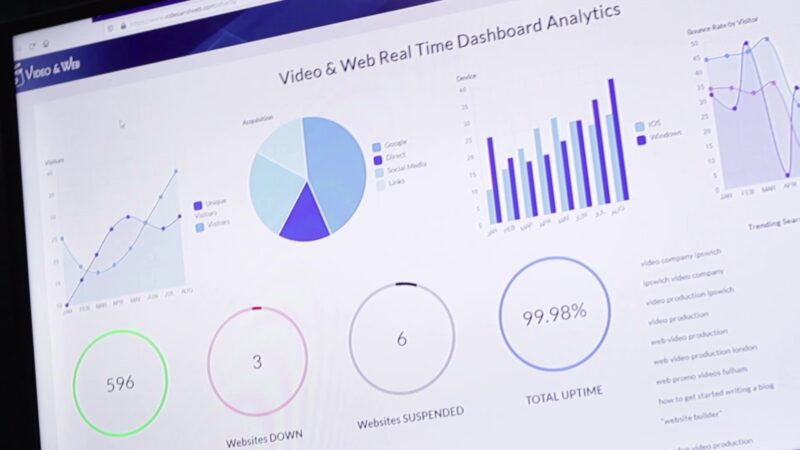
At Video & Web, our maintenance customers get access to our custom analytics data platform, which collates and simplifies the data.
By setting up goals and tracking your performance, you can improve your digital marketing campaigns and ultimately achieve better results for your business.
Conclusion
As you can see, understanding PPC analytics is critical for successful digital marketing. The insights from this data are invaluable and will help you create effective campaigns, target the right audience and ensure your business succeeds online.
Utilizing the power of PPC analytics to gain a better understanding of customer behaviour, interests, and preferences will give your business an edge over the competition.
Further Reading
Complete Guide To Analytics For Email Marketing
Need help turning this advice into action?
If you are reviewing your website, marketing or online visibility, we can help you work out what to improve first.
Related articles
 Paid Advertising
Should You Bid on Your Own Business Name?
Should you bid on your own business name? If somebody types your company name into Google, you have already done the difficult bit. They…
Read article
Paid Advertising
Should You Bid on Your Own Business Name?
Should you bid on your own business name? If somebody types your company name into Google, you have already done the difficult bit. They…
Read article
 SEO
How to Get Your Website to the Front of the Crowd
Creating a website today without SEO, social media, or any marketing at all is a bit like standing at the back of the O2…
Read article
SEO
How to Get Your Website to the Front of the Crowd
Creating a website today without SEO, social media, or any marketing at all is a bit like standing at the back of the O2…
Read article
 SEO
Designing a Website with SEO in Mind
Designing a Website with SEO in Mind walks you through the steps you need to creae a website that serves people and search engines…
Read article
SEO
Designing a Website with SEO in Mind
Designing a Website with SEO in Mind walks you through the steps you need to creae a website that serves people and search engines…
Read article
 VideoandWeb.com