What is Pay Per Click (PPC)?
 Search engine advertising, or Pay Per Click (PPC) as it’s commonly referred to, is a form of online advertising that allows businesses to advertise their product or service directly to consumers searching for it through search engines. The ads appear when users search for related terms or keywords within specific verticals.
It can also be an excellent way for new companies to promote their offerings to customers who have expressed interest in their sector and products or services.
What is Pay Per Click (PPC)?
Pay Per Click (PPC) advertising is a way to get your company’s message in front of people actively looking for your product or service. This type of advertising lets you reach your customers when they’re ready to buy, and it helps you connect with potential customers before they make their purchase decision. It can also be an excellent way for new businesses to promote their offerings and services to customers who have expressed interest in their sector and the products or services they offer.
How Does PPC Work?
PPC advertising is the process of bidding on keywords related to your business on search engines.
To do this, you bid on keywords that you want to appear when people search for them. Then, you’re charged every time someone clicks on your ad and goes to your website or store page.
You can also use PPC advertising to build brand awareness. This is called branding Pay Per Click (PPC), and it’s a good way for new businesses to promote their offerings to customers who have expressed interest in their sector and products or services. Imagine if you were the owner of a restaurant that opened last week.
Even though you don’t have any customer reviews yet, you could start building awareness for your restaurant by running a campaign that uses ads relating to food and restaurants in different sectors, like London, where you live. You will only be charged if someone clicks through from the ad campaign – but it’s still an effective way for new businesses (or established ones) to market themselves without spending too much money upfront!
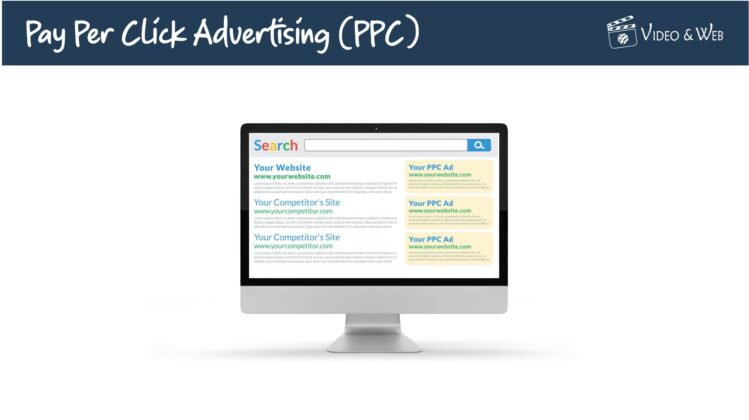
Pay Per Click Ads are displayed before or with the organic search results

Advantages
There are many advantages to Pay Per Click (PPC) advertising, so it has grown in popularity since its inception. For example, the cost of a click with Pay Per Click (PPC) is typically lower than other forms of digital marketing like display ads. The cost per click for Pay Per Click (PPC) varies depending on which search engine you’re working with, but it typically falls within the range of 10p-£1.00 for each click. With this form of advertising, businesses can also target their desired audience by location and interests, to name a few options.
Disadvantages
Pay Per Click (PPC) advertising is not the most cost-effective form of marketing. Therefore, it’s essential to consider how your budget will be allocated and understand how much you can spend on Pay Per Click (PPC) advertising.
Pay Per Click (PPC) advertising falls short in terms of long-term branding, as it does not establish a strong brand identity over time. Consumers associate your business with the ads they see. If you have multiple ads running at once, you are likely to confuse consumers and dilute the effectiveness of all of your marketing efforts.
Another disadvantage to Pay Per Click (PPC) is that there are limited keywords available for advertisers to use in their campaigns. As a result, you may find that your customised ad becomes less relevant to the keyword you want or when you want it to appear after some time.
How to Implement Pay Per Click (PPC)
You’ll need to create a Pay Per Click (PPC) account with a search engine provider to get started. Then, you will want to configure your account by setting the language(s) you would like to target and the countries in which you’d like to advertise. You can also set your ads’ maximum cost per click (CPC) and budget limits.
Next, you will want to determine which keywords and phrases will be most relevant for your business. Then, you should place these keywords into your Pay Per Click (PPC) campaign’s ad group. This will allow you to put all of your ads about one topic together in one place for easy management.

You may need to look at your search data to determine the best keywords
After configuring and setting up your Pay Per Click (PPC) campaign, it’s time to start running ads! The process is straightforward: submit the URL of the page on which you want your ad placed along with some text or an image, and select how much money or how many clicks you would like to spend on that particular ad. Once you submit this information, search engines will automatically show your advertisement when someone searches for those terms or phrases within the list of results that you specified in steps one through four.
It can be a bit complicated, and to get the best value for money with a larger advertising budget, and you may need some professional help. Here at Video & Web, we manage PPC for many clients as individual campaigns or as part of our SEO services. If you need help with your PPC campaign, get in touch.
In summary
Pay Per Click (PPC) allows businesses to advertise their product or service directly to consumers who are actively looking for it. This type of advertising is great because it can be a way for new businesses to promote their offerings to people who have expressed interest in the sector and product or service.
Need help turning this advice into action?
If you are reviewing your website, marketing or online visibility, we can help you work out what to improve first.
Related articles
 Paid Advertising
Should You Bid on Your Own Business Name?
Should you bid on your own business name? If somebody types your company name into Google, you have already done the difficult bit. They…
Read article
Paid Advertising
Should You Bid on Your Own Business Name?
Should you bid on your own business name? If somebody types your company name into Google, you have already done the difficult bit. They…
Read article
 SEO
Designing a Website with SEO in Mind
Designing a Website with SEO in Mind walks you through the steps you need to creae a website that serves people and search engines…
Read article
SEO
Designing a Website with SEO in Mind
Designing a Website with SEO in Mind walks you through the steps you need to creae a website that serves people and search engines…
Read article
 SEO
What is Gemini and Why Does It Matter for SME Digital Marketing?
How people find and trust information online is changing. Google’s Gemini AI no longer serves up just a list of links. Read more
Read article
SEO
What is Gemini and Why Does It Matter for SME Digital Marketing?
How people find and trust information online is changing. Google’s Gemini AI no longer serves up just a list of links. Read more
Read article
 VideoandWeb.com