Skills Needed for Presenting a Podcast

Podcasts have gained global popularity as a unique platform for connection, information, and entertainment. They provide flexible listening options, whether people are commuting, working out, or relaxing. However, creating a standout podcast involves more than an interesting topic or high-profile guests. The presenter’s skills—such as voice modulation, pacing, and storytelling—play a central role in holding the audience’s attention and delivering a high-quality show. In this article we explore essential skills needed for presenting a podcast.
To make a podcast memorable, presenters need more than a microphone and an outline. Clear speech, balanced pacing, and connecting with your audience are all important in creating the professional sound listeners expect.
Key Presentation Skills for Podcasters
Being a great presenter is more than just speech, its a skill that many hone for many years. However, if you’re new to the practise there are things you can do to build upon your current presentation skills.
Clarity and Pronunciation: Clear speech with crisp pronunciation adds polish. Practice with tongue twisters or complex phrases to improve clarity and build confidence.
Storytelling Techniques: Podcasts that feel conversational are often the most successful. Strengthen storytelling by creating a narrative arc and including anecdotes, humor, or relatable experiences to connect with listeners.
Audience Awareness: Tailor your approach to your audience’s preferences by studying other popular shows in your genre. Knowing what engages them can help you fine-tune your podcast’s tone and style.
Balanced Pacing and Tone: A steady pace and appropriate tone keep listeners engaged. Adjusting your delivery for the content—whether serious or lighthearted—makes your message more effective.
Knowing your audience is also essential. Different audiences respond to different approaches, so understanding your listeners’ preferences helps shape your podcast’s tone and style. Listening to other popular shows in your genre can offer insights into effective engagement strategies, enabling you to tailor your approach to suit your audience’s tastes, whether you aim to educate, entertain, or inspire.

Techniques for a Professional Sound
Achieving a professional sound requires preparation. Start with thorough episode preparation by outlining key points, questions, and transitions so that you can deliver naturally. Practice voice modulation to avoid a monotonous delivery, making your voice more expressive and interesting.
Listening to established podcasts can provide inspiration and insight into effective presentation techniques. Warming up your voice before recording also improves clarity and energy, which adds a polished touch to the final result.
Managing Nerves
Feeling nervous at the start is common, but there are ways to manage it. Controlled breathing helps keep your voice steady, preventing shallow breaths that can strain your vocal cords. Taking a few deep breaths before recording can bring a sense of calm and focus, making you sound more at ease.

Another helpful strategy is positive self-talk. Remind yourself that listeners are eager to hear your thoughts. Visualizing a smooth, engaging flow can help ease anxiety. Speaking slightly slower than usual also aids clarity and gives you more control, helping you stay on track. Finally, reframing nervousness as excitement channels energy into your delivery, adding an upbeat tone that listeners appreciate.
Finding a Balance Between Structure and Improvisation
Podcasts thrive on a conversational style rather than a rigid script, so balancing structure with flexibility is key. Using a loose outline with main points and transitions helps you stay organized while allowing for natural phrasing. Practicing key points without relying heavily on notes can enhance spontaneity and create a more relaxed, connected feel.
Using prompts or short reminders helps you stay on track without over-scripting, while adding pauses and emphasis to your delivery can create a dynamic and engaging flow.
Creating High-Quality Sound
Sound quality makes a big difference in how listeners experience your podcast. Simple steps can help improve your audio quality and avoid distractions.
Sound-Treated Space: Reduce echoes by recording in a small room with soft furnishings, like rugs or blankets, or even in a closet for minimal background noise.
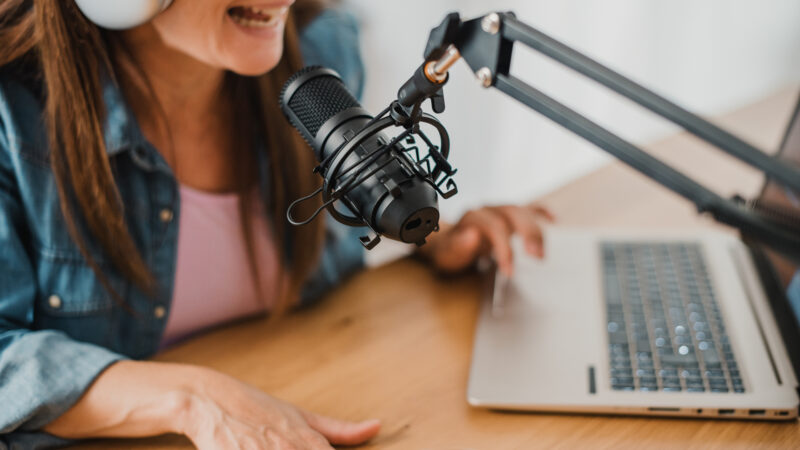
Quality Microphone: Invest in a condenser microphone with a pop filter for smooth, clear sound. Position it about six to eight inches from your mouth and angle it slightly away to reduce breath sounds.
Steady Volume: Maintain a consistent volume to keep listeners engaged. Compression tools during editing can help balance audio levels, while voice warm-ups improve clarity and prevent strain.
 Editing and Production Tips
Editing refines your recording, removes mistakes, and ensures a seamless flow for the listener. Free editing software like Audacity or GarageBand provides basic tools for trimming, adjusting volume, and reducing background noise, which are ideal for beginners. As you gain experience, advanced software like Adobe Audition offers additional options for sound enhancement.
Noise reduction and equalization tools improve audio quality by reducing ambient sounds and balancing voice frequencies, adding a smooth touch to your recording. Adding subtle background music or sound effects further enhances the listening experience without overpowering your voice.
Streamlining content flow by cutting out filler words or repetitive phrases keeps episodes concise and focused, providing a polished and enjoyable experience. Consistent branding, such as unique intros, outros, or signature sound effects, builds a recognizable identity for your show, fostering listener loyalty.
 Preparing for Each Episode
A few final steps before recording can ensure a smooth experience. Checking your equipment, like the microphone and headphones, helps avoid technical issues during the session. Reviewing your outline, rehearsing key points, and preparing transitions allows for a comfortable flow. If you have guests, brief them on the structure and topics to create a natural, engaging conversation.
Having a backup recording method, such as a secondary device, can also be useful in case of unexpected technical problems, ensuring your work remains safe.
By applying these techniques, podcasters at any level can create engaging, professional-sounding episodes that attract and retain listeners. With consistent practice, these skills will become second nature, allowing you to produce a polished and expertly crafted show.
Summary
• Develop Essential Skills: Focus on clear pronunciation, engaging storytelling, audience understanding, and balanced pacing to enhance your presentation.
• Sound Professional from Day One: Prepare thoroughly, practise voice modulation, learn from successful podcasts, and use vocal warm-ups to improve delivery.
• Manage Nerves: Use deep breathing and positive self-talk, control your pacing, and reframe nervousness as excitement to stay calm and confident.
• Balance Script and Improvisation: Create a flexible outline, practise natural speaking, use prompts, and add pauses and emphasis to engage listeners effectively.
• Optimise Voice Recording: Set up a sound-treated space, choose a quality mic, position it correctly, and maintain steady volume for clear,
Further Reading
How to Transform Your Podcast into an Engaging Video Experience
Need help turning this advice into action?
If you are reviewing your website, marketing or online visibility, we can help you work out what to improve first.
Related articles
 Content
Traffic Magnets That Keep Visitors Coming Back
Getting people to visit your website is one challenge. Giving them a reason to stay, discover your business and come back is another. We…
Read article
Content
Traffic Magnets That Keep Visitors Coming Back
Getting people to visit your website is one challenge. Giving them a reason to stay, discover your business and come back is another. We…
Read article
 Content
How to Explain Complicated Services Simply
If it takes ten minutes to explain what your business does, you may have already lost the customer. Just because you know your profession…
Read article
Content
How to Explain Complicated Services Simply
If it takes ten minutes to explain what your business does, you may have already lost the customer. Just because you know your profession…
Read article
 Content
Do UK Businesses Have to Label AI-Generated Content?
The biggest tool to level the business playing field for years is about to be outed. More of our writing donkey work now goes…
Read article
Content
Do UK Businesses Have to Label AI-Generated Content?
The biggest tool to level the business playing field for years is about to be outed. More of our writing donkey work now goes…
Read article
 VideoandWeb.com