If your business was a movie… what would you put in the trailer?
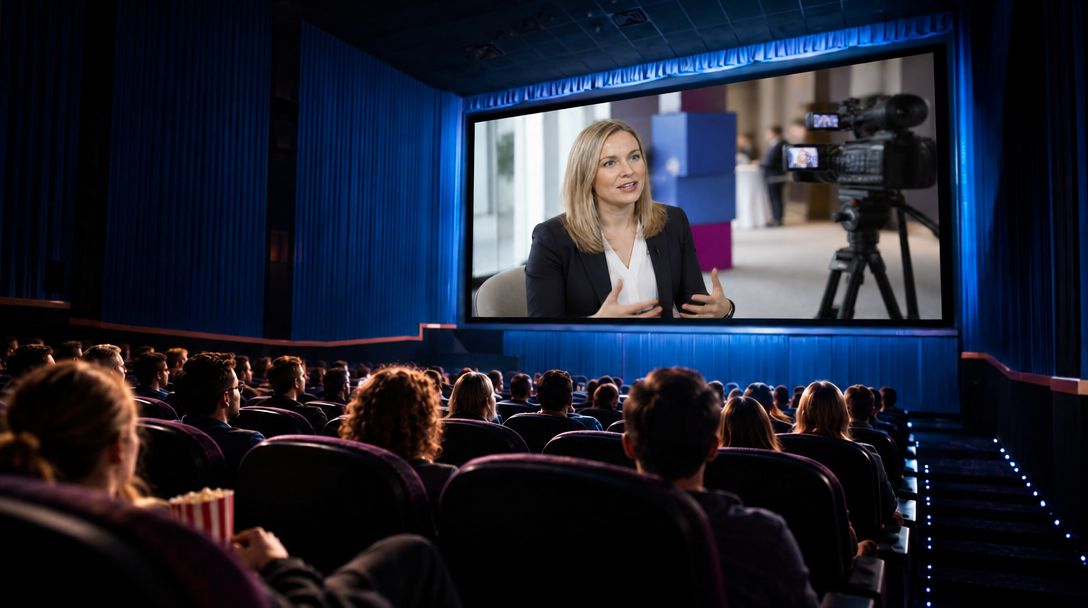
If your business was a movie, what would you put in the trailer?
If your business was a movie, what would you put in the trailer? A major film can cost hundreds of millions to make, but producing the film is only part of the job. Somehow, the studio still has to persuade people it is worth spending their time and money to watch.
The sales process starts long before the cameras are rolling. Who are the actors? Who is directing? What has the writer done before? Is it based on a bestselling book? Even the scale of the production can become part of the attraction. There is something difficult to resist about being invited to see the biggest, most ambitious or most expensive film ever made.
Eventually, though, all of that has to be distilled into something that makes people want to buy a ticket. That’s where the trailer comes in, and it has interesting parallels with how businesses use video to promote themselves.
What is the job of a movie trailer?
A movie trailer isn’t a condensed version of the film. It’s a carefully selected collection of moments designed to make you want to see more. When you consider the amount of money riding on a major movie, it’s easy to understand why studios take trailers so seriously. The film itself might be brilliant, but if the trailer fails to generate interest, fewer people will discover just how brilliant it is.
A business video has much the same job as a movie trailer: give the audience a reason to want more.
Going to the cinema is an investment of time and money, and people have plenty of other things they could be doing. A business faces a similar problem. Your potential customer has competitors they could investigate, other ways they could solve their problem and countless things competing for their attention. A promotional video therefore has a very similar job to a movie trailer: it doesn’t need to tell them everything about the business, but it does need to make them interested enough to take the next step.
That distinction matters because businesses often try to cram too much into a video. The company’s history, every service, every accreditation, every location, and a carefully worded mission statement all compete for screen time. The result might contain plenty of information, but that doesn’t necessarily make it interesting.
Put the best bits in the trailer.
There are no hard-and-fast rules for what goes into a movie trailer, but a great place to start is with the best bits. How many comedy films have you watched where you realise afterwards that most of the best jokes were in the trailer? It might be mildly irritating once you’re sitting in the cinema, but from the studio’s point of view the trailer has already done its job. You bought a ticket.
Businesses are sometimes surprisingly reluctant to take the same approach. We worry about boasting, so we retreat into safe language about quality, service and commitment, while the things that actually distinguish the company are left somewhere in the background. We may also fear setting expectations too high and disappointing people, or making a bold claim that competitors will be only too pleased to challenge.
There is a lesson in one of advertising’s most famous slogans. Carlsberg didn’t tell us it was the best lager in the world. It was “Probably the best lager in the world.” That one word made an enormous claim feel playful rather than arrogant. In fact, Carlsberg itself has described the line as having an “ironic and understated tone”.
The point isn’t that businesses should start adding “probably” to everything they say. It’s that promoting your best qualities doesn’t require making claims you can’t substantiate. You can be confident without overpromising. If you have created something impressive, show it. If you have solved a particularly difficult problem, tell us about it. If you have decades of experience, unusual expertise or a product that does something remarkable, those are precisely the things that deserve screen time.
There is an old advertising expression: sell the sizzle, not the steak. It works particularly well here. The trailer doesn’t need to catalogue everything the business does; it needs to show the moments that make those things desirable. The sparks flying from the workshop, the transformation at the end of a project, the reaction of a delighted customer or the expert solving a problem that looked impossible can often say far more than another list of services.

Sell the sizzle, not the steak. Show the parts of your business that make people want to know more.
More importantly, try to provide evidence rather than simply making claims. Anyone can say that their company provides outstanding service or exceptional quality. A manufacturer can actually show its machinery operating. A builder can show a property’s transformation. A designer can take us through a finished project, while an engineer can explain how a difficult problem was solved. In other words, don’t just tell the audience that the movie is good; show them the scene that proves it.
Set up the story without telling the whole thing.
Movie trailers are particularly good at establishing a premise. Something has happened, there is a problem to solve, a challenge to overcome or a question that needs answering. We get enough information to understand the situation, but not enough to know how everything turns out.
A business video can work in much the same way. Instead of starting with the company’s history and a list of services, start with why someone might need you. What problem brings customers to your door? What frustrates them? What are they trying to achieve, and what might happen if they get it wrong?
Then show enough of your solution for the viewer to understand why your business might be able to help. You don’t have to explain every stage of the process because there will be opportunities to do that elsewhere on your website or in subsequent content. The video simply needs to earn enough interest for somebody to want to continue the conversation.
This is one of the reasons a good promotional film can sometimes say less and achieve more. Trying to answer every possible question often leaves the viewer with nothing in particular to remember.
Put the stars of your business on screen
Film studios understand the value of recognisable talent. If they have paid for a major actor or celebrated director, you can be fairly certain that person will feature prominently in the marketing. Businesses have stars too, although they aren’t necessarily the people with the grandest job titles.
It might be the managing director, but it could equally be the engineer who understands a complicated machine better than anyone else, the consultant who can make a difficult subject understandable, the craftsperson with 30 years of experience or the member of staff customers repeatedly mention in their feedback. These people have something genuinely valuable to contribute because they know their subject.
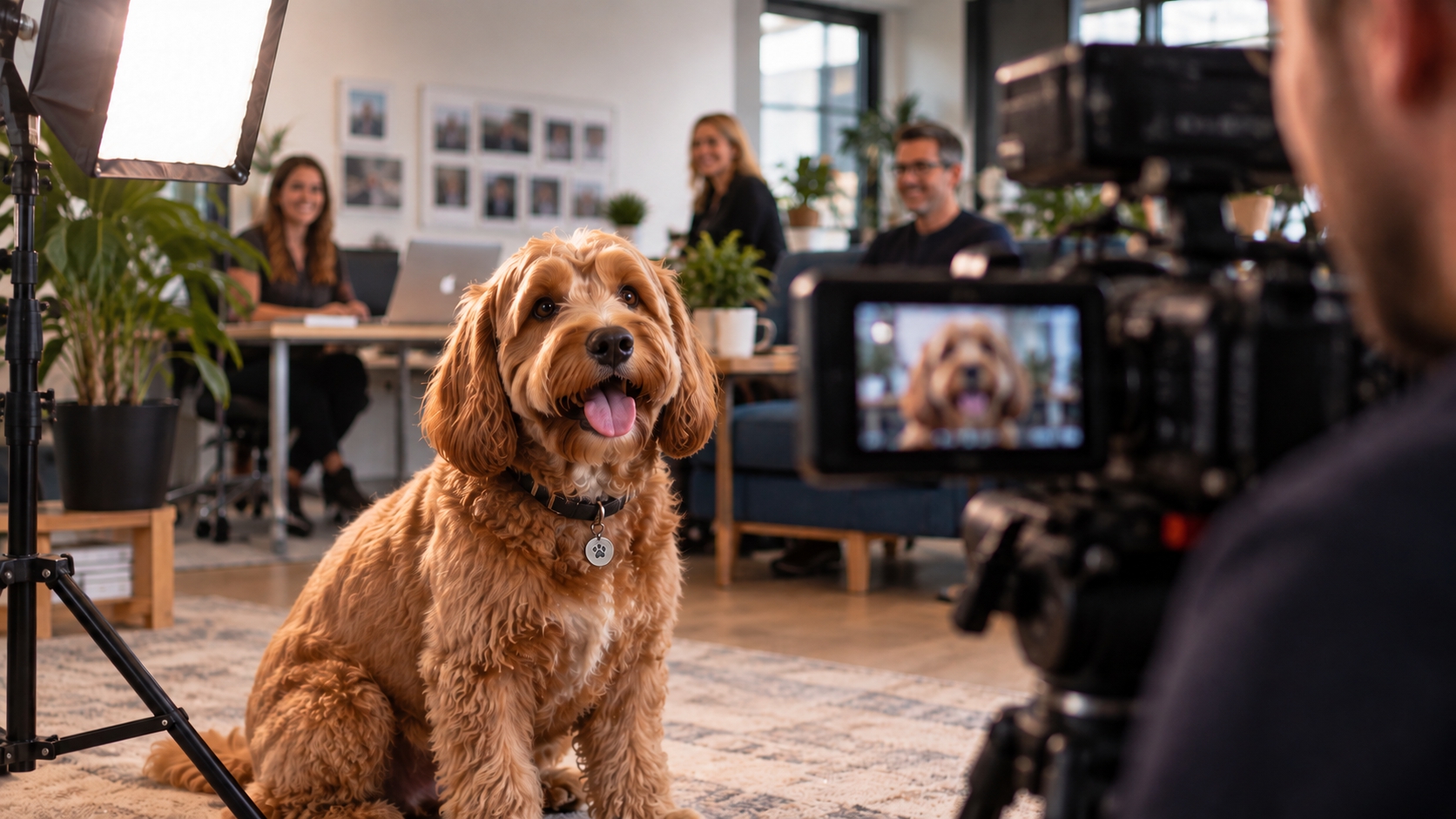
Every business has its characters. Sometimes the most memorable star isn’t the person with the grandest job title.

Putting them on camera allows potential customers to meet some of the people behind the company before making contact. They can hear how they speak, see their enthusiasm, and get a sense of whether they might trust them to help. Nobody needs to become a polished television presenter. In many cases, being knowledgeable, interested and recognisably human is considerably more persuasive.
There is another advantage. When knowledgeable people regularly appear in a company’s videos, they can become familiar faces associated with the business. Over time, the audience begins to recognise not only the company name or logo but the people and expertise behind it.
Let your customers have a part too.
Movie trailers sometimes include reviews or enthusiastic reactions from audiences. They provide something the studio can’t quite provide for itself: somebody else saying that the film is worth watching.
Your customers can perform much the same role. A written testimonial is useful, but seeing and hearing a real customer talk about their experience can be particularly persuasive. Their word choice, expressions, and enthusiasm communicate what’s hard to reproduce in carefully written marketing copy.
The most useful testimonials go beyond saying the company was wonderful. Ask the customer to explain what they needed, why they chose the business, what happened and what difference it made. Suddenly the viewer isn’t simply hearing another claim about good service; they are seeing a small story with a problem, a solution and a result.
That also makes the testimonial useful beyond a traditional promotional film. A particularly strong customer story may deserve its own video, while shorter extracts can support individual services or provide material for social media.
One shoot can produce more than one trailer.
It is no longer particularly useful to think of a business video as one finished film that sits on the homepage. A well-planned filming session can produce a main promotional video while also creating material for shorter social videos, vertical clips, individual customer stories, answers to common questions, presentations and future campaigns.
It doesn’t mean taking one video and chopping it into smaller pieces just to have more content. Different audiences and different stages of the customer journey need different things. Someone encountering your business on LinkedIn might respond to a short observation from one of your experts, while a potential customer researching a complicated purchase may happily spend several minutes watching a detailed explanation or case study.
Thinking of the footage as an asset rather than just the finished film changes how you plan a shoot. An interview with somebody who genuinely understands their subject might contain half a dozen useful ideas. A project could provide establishing shots, demonstrations, before-and-after material and details that remain useful long after the original video has been published.
The result is not simply more content. Done properly, it gives you a collection of genuine material about the business that you can use when and where it matters most.
Do people still watch longer business videos?
There is a persistent idea that modern audiences have such short attention spans that every video needs to be over almost as soon as it starts. The popularity of short-form video has certainly changed the way we consume content, but that doesn’t mean people are unwilling to watch something longer.
People will happily spend time watching an interview, demonstration, documentary or explanation when the subject interests them or the information is valuable. They’re much less willing to keep watching something that gives them no reason to stay.

People will give you their attention when you give them a reason to keep watching.
That makes the opening of a video particularly important, but it doesn’t mean every subject needs to be squeezed into a few seconds. A short social video, a 90-second company introduction, and a ten-minute customer case study can all be effective because they do different jobs. The useful question isn’t simply how short you can make the video, but whether you have given somebody a reason to keep watching.
Does AI change what belongs in the trailer?
AI has made it considerably easier to create impressive-looking images and video. Combine that with enormous stock libraries, and businesses now have access to material that might once have required actors, specialist locations, large crews and substantial budgets. Used well, these tools open up some genuinely interesting creative possibilities.
They also make it remarkably easy to create something that looks polished while saying very little about the actual business. A beautifully generated office full of smiling people might look professional. Still, if it isn’t your office, your people or your expertise, the customer hasn’t necessarily learned anything useful about you.
AI and stock footage can be excellent ways to illustrate ideas or provide shots that would be impractical to film. They work particularly well when they support genuine material rather than replace it. The things another business cannot easily reproduce remain your people, knowledge, work, customers and experience, so those should still be the stars of the show.

Sometimes your customers can become part of the trailer. Give people something worth sharing and they may help tell the story for you.
What would you put in your business trailer?
The opportunities for using video have expanded enormously. A business film can live on a website, appear in presentations and emails, become part of a social campaign and provide material for dozens of shorter pieces of content. Yet the basic principle behind a good trailer hasn’t really changed.
If your business were a movie, you probably wouldn’t try to squeeze the entire plot into two minutes. You would choose the moments that make people curious, show the best of what you have, introduce the people worth watching and give the audience enough of the story to make them want more.
That’s a useful test for any business video. Rather than asking how much information you can fit into it, ask what somebody should remember after watching it and what you would like them to do next.
After all, the purpose of a trailer isn’t to replace the movie. It’s to make people want to see it.
Need help turning this advice into action?
If you are reviewing your website, marketing or online visibility, we can help you work out what to improve first.
Related articles
 Content
How to Explain Complicated Services Simply
If it takes ten minutes to explain what your business does, you may have already lost the customer. Just because you know your profession…
Read article
Content
How to Explain Complicated Services Simply
If it takes ten minutes to explain what your business does, you may have already lost the customer. Just because you know your profession…
Read article
 SEO
Why Sounding Human Again May Be the Future of SEO
Why sounding human again may be the future of SEO. Discover why authentic content, Geo Marketing, and real expertise matter more than ever in…
Read article
SEO
Why Sounding Human Again May Be the Future of SEO
Why sounding human again may be the future of SEO. Discover why authentic content, Geo Marketing, and real expertise matter more than ever in…
Read article
 SEO
How to Get Your Website to the Front of the Crowd
Creating a website today without SEO, social media, or any marketing at all is a bit like standing at the back of the O2…
Read article
SEO
How to Get Your Website to the Front of the Crowd
Creating a website today without SEO, social media, or any marketing at all is a bit like standing at the back of the O2…
Read article
 VideoandWeb.com