Choosing The Right Website Software
 Choosing the right website software. If you’re setting up a business website, there are many decisions to make. From choosing the right domain name to selecting the perfect hosting provider, you have to consider every detail.
One of the most critical decisions is what software you should use for your website. Get started on the right foot with this beginner’s guide to understanding and choosing the right website software for your business!
What is Website Software?
There are many website software programs out there. Unfortunately, knowing which is right for your business can be tricky. Here are some things to consider when choosing website software:
- Ease of use: You want a program that is easy to use and understand. Otherwise, you’ll spend more time figuring it out than actually using it.
- Functionality: Make sure the program has all the needed features. Otherwise, you’ll have to find another program or add-on to do what you want.
- Cost: Website software can range in price from free to hundreds of dollars per month. Choose the one that fits your budget and needs.
- Support: If you run into problems, you’ll want a program with good customer support. Otherwise, you could be stuck trying to figure it out on your own.
Types of Website Software
There are a few different types of website software available, each with its own features and benefits. Here is a brief overview of some of the most popular options:
- WordPress is one of the most popular website software options. It is free to use and has a wide variety of plugins and themes available to make your site look and function however you want. WordPress is an excellent option for small businesses or those just starting with a website.
- Drupal – Drupal is another popular option with many powerful features. However, it can be challenging to use and isn’t as beginner-friendly as WordPress. Drupal is a good option for businesses that need a more robust website or those with some web development experience.
- Joomla! – Joomla! It is another popular open-source content management system (CMS). Like Drupal, it offers more powerful features than WordPress but can be more difficult to use. Joomla! It is a good option for businesses that need a more robust website or for those who have some experience with web development.
- Wix – Wix is a cloud-based website builder that allows you to create websites without prior experience. Wix has everything you need to get started, including templates, hosting, and support. Wix is a good option for small businesses or individuals who want an easy way to create a basic website without technical knowledge.
- Squarespace – Squarespace is a website builder that allows you to create a website easily. It offers templates, hosting, and call centre support, so you don’t need technical knowledge. Squarespace is an excellent option for small businesses or individuals who want an easy way to create a beautiful website without any coding required.
- Magento: Magento is an open-source eCommerce platform that provides online stores with a wide range of features and options. Thousands of online stores around the world use Magento.
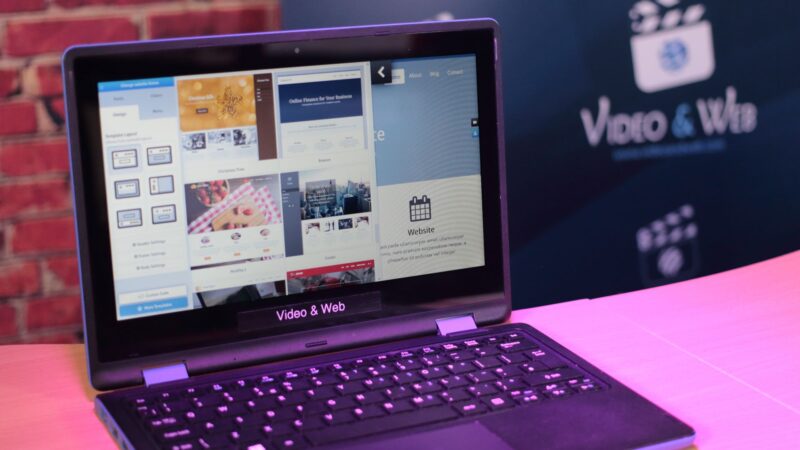
- Web Builder at Video & Web. We have our own easy-to-use drag-and-drop software here at Video & Web. Our Website Builder is a fast, simple way to get a professional-looking website online, with one-to-one support provided by our small, dedicated, friendly team. The responsive design means your new site will work beautifully on phones, tablets, and desktops.

With some platforms you don’t need to know any web code
Pros and Cons of Each Type
There are three main types of website software: static, dynamic, and e-commerce. Each has its own pros and cons that you should consider before making a decision.
Static websites are the simplest and most cost-effective to create. They’re easy to set up and maintain but are not very flexible. For example, you can’t add or change content without editing the HTML code, so if you’re not comfortable coding, a static site may not be the right choice.
Dynamic websites are more flexible than static sites but are also more expensive and complex to create. You can add and change content without editing HTML code with a dynamic site. However, you’ll need to be comfortable with server-side scripting languages such as PHP or ASP.NET to create a dynamic website from scratch.
E-commerce websites are the most complex and expensive type of website to create. In addition, they require specialised knowledge and skills to set up and maintain an online store. If you’re unsure whether you have the time or expertise to manage an e-commerce website, it’s probably best to hire a professional web development company to handle it.
Choosing the Right Website Software for Your Business
A few key things to consider when choosing the right website software for your business. The first is what kind of website you want to create. For example, are you looking to create a simple landing page or a more complex website with multiple pages? Once you know the type of website you want to create, you can narrow down your options.

The next thing to consider is what features you need. For example, do you need e-commerce functionality or a contact form? Make a list of these must-haves and use it as a starting point for your research.
Next, take some time to read online reviews of the various options. See what others have to say about the software you’re considering. Pay attention to both the positive and negative reviews to get a well-rounded idea of each option.
Finally, try out any software you’re considering before making a final decision. Many website software providers offer free trials or demo versions of their products. This is a great way to see firsthand how easy (or difficult) the software is and whether it has all the features you need.
Now that you know the basics of website software, it’s time to choose the right one for your business. Here are a few things to keep in mind as you make your decision:
- What kind of budget do you have?
- How much technical expertise do you have?
- What kind of features do you need?
- Do you need a hosted solution, or can you host it yourself?
Once you’ve considered these factors, it should be easier to reach a decision.
Conclusion
Choosing the right website software for your business is an important decision that should not be taken lightly. We hope this guide has given you the tools and knowledge to make an intelligent, informed choice when selecting the best platform for your business needs.
Remember, many options are available, so take some time to research before settling on one provider or solution. Then, with the right website software in place, you can ensure that your online presence runs smoothly and efficiently, giving you more time to focus on other parts of running a successful business.
Further Reading
Need help turning this advice into action?
If you are reviewing your website, marketing or online visibility, we can help you work out what to improve first.
Related articles
 Content
Traffic Magnets That Keep Visitors Coming Back
Getting people to visit your website is one challenge. Giving them a reason to stay, discover your business and come back is another. We…
Read article
Content
Traffic Magnets That Keep Visitors Coming Back
Getting people to visit your website is one challenge. Giving them a reason to stay, discover your business and come back is another. We…
Read article
 Websites
How to Post on WordPress
WordPress is one of the most popular Content Management Systems (CMS) on the internet. This guide will walk you through the basic steps and…
Read article
Websites
How to Post on WordPress
WordPress is one of the most popular Content Management Systems (CMS) on the internet. This guide will walk you through the basic steps and…
Read article
 Websites
6 Reasons Why WordPress Is Still the Best Website Builder
In the ever-evolving landscape of website development, numerous platforms vie for attention, each promising unique features and advantages. Amongst these, WordPress is a stalwart,…
Read article
Websites
6 Reasons Why WordPress Is Still the Best Website Builder
In the ever-evolving landscape of website development, numerous platforms vie for attention, each promising unique features and advantages. Amongst these, WordPress is a stalwart,…
Read article
 VideoandWeb.com